Our Story
A softer landing, made by hand in Monontsha Village.
Mam Betty's Safe Haven began at a kitchen sewing machine in Monontsha Village — one hat, for one sister, on a hard day.
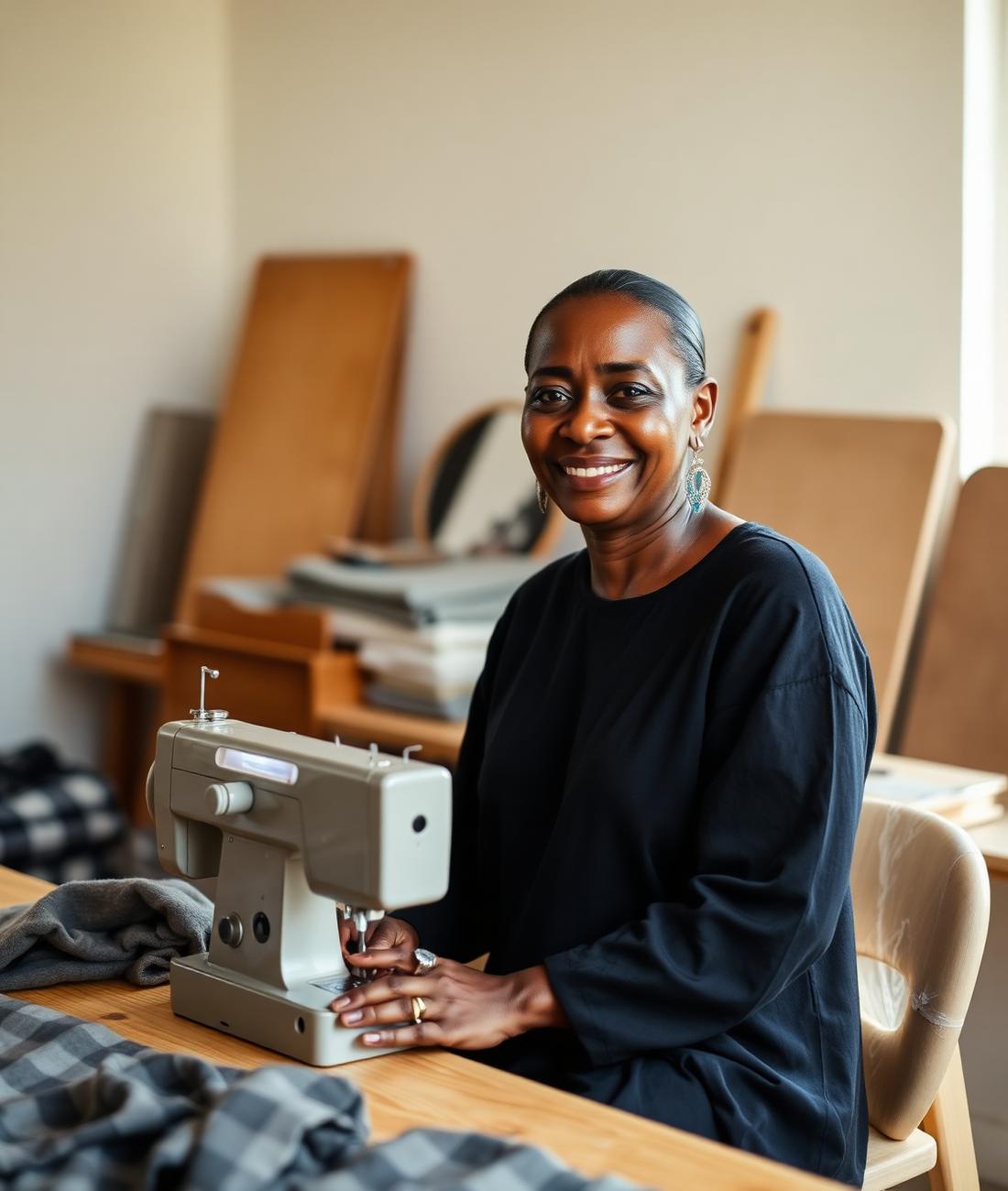
When my sister Thandi was diagnosed, we did what most families do: we searched for anything that would make the everyday feel easier. A doek that wouldn't itch. A gown she could put on with one hand. A cream that didn't sting under a Highveld sun.
What we found was a lot of packaging, a lot of medical language, and almost nothing that felt like it was made for a person we loved. So I started sewing at our kitchen table in Monontsha Village. Then friends started asking. Then their friends did — from Khayelitsha to Sandton.
Mam Betty's Safe Haven is what came of that — a small, slow South African company making the quiet things we wished we'd had. Every piece is designed with patients and oncology sisters, and named for the feeling it should bring, not the diagnosis it accompanies.
— Naledi, founder
A short timeline
- 22
2022
One handmade beanie
Naledi sewed a soft cotton hat for her sister Thandi in the weeks after Thandi's first treatment at Groote Schuur. Nothing on the shelf felt kind enough.
- 23
2023
Thandi's friends started asking
Requests turned into a small batch, made from a home studio in Monontsha Village. An oncology sister from Tygerberg Hospital joined as our first advisor.
- 24
2024
The first collection
Twelve pieces across headwear, adaptive layers, and skincare — tested with more than 60 patients across clinics in Monontsha Village, Johannesburg, and Durban.
- 26
2026
Mam Betty's Safe Haven today
A small team stitching in Salt River, a slow production schedule, and one promise: we don't ship anything we wouldn't send to an ouma, a sister, or a friend.
Where we come from
Honouring Monontsha Village
Monontsha is a small village in QwaQwa, Free State, tucked against the Lesotho border in the shadow of the Maluti mountains. This work is dedicated to the under-privileged women of our village and the many like it — mothers, sisters and grandmothers who cannot afford cancer treatment or the simple comforts that make treatment bearable. Every hat, gown and posy is stitched in their honour.